Best for privacy and safety:Anonymous dating apps -- your identity stays protected until you choose to share it
Best for instant visual chemistry: Regular dating apps -- photo-first browsing enables quick decisions
Overall pick: Anonymous dating apps -- for users who value privacy, deeper connections, and control over their personal information
The dating app landscape in 2026 is split between two fundamentally different philosophies. Regular dating apps -- Tinder, Bumble, Hinge, and their peers -- operate on the assumption that your photos and real identity should lead the way. Anonymous dating apps flip this model entirely, letting personality, conversation, and compatibility drive the experience before identity enters the picture.
This is not a minor design difference. It affects your privacy, your safety, the quality of your connections, and how much of your personal data ends up in the hands of advertisers. Here is a detailed, honest comparison of both approaches across the criteria that matter most.
Overview: How Each Model Works
Regular Dating Apps
Regular dating apps follow a well-established pattern. You create a profile with your real first name, upload 3-6 clear face photos, add a bio, and start swiping. The matching mechanism is primarily visual -- you decide whether to engage with someone based on their appearance, and they do the same for you.
These apps monetize through a combination of subscriptions, in-app purchases (boosts, super likes), and advertising. Many also generate revenue by sharing user data with third-party companies. The business model depends on high engagement, which translates to design choices that prioritize speed and volume over depth.
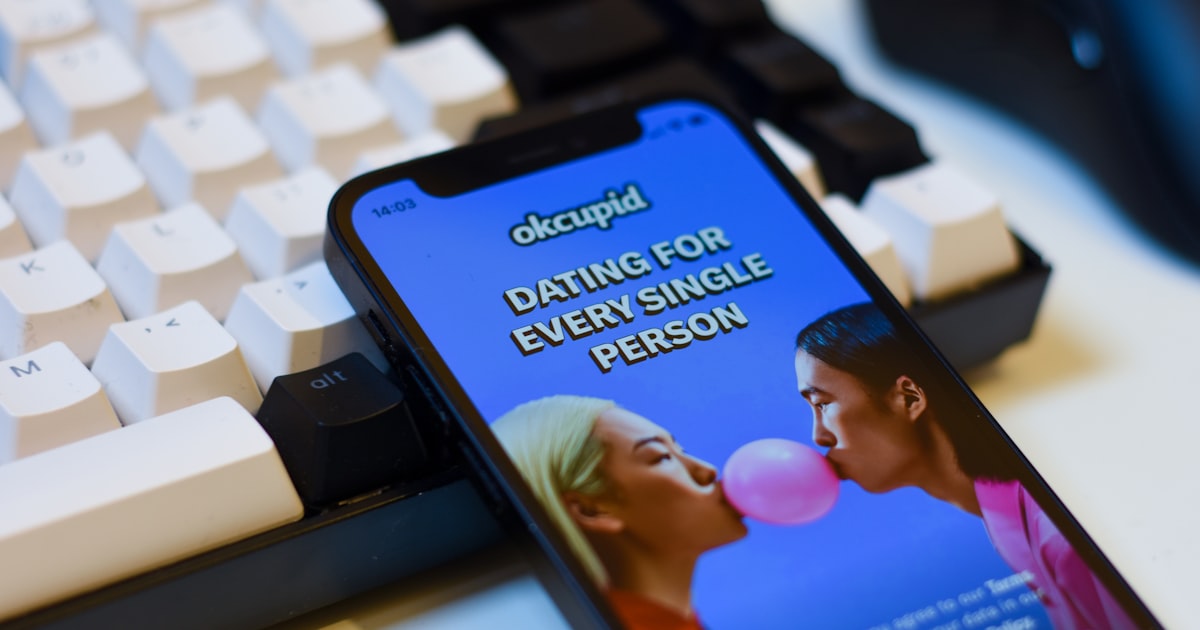
Major players include Tinder (350+ million downloads), Bumble, Hinge, OkCupid, and Coffee Meets Bagel.
Anonymous Dating Apps
Anonymous dating apps start from a different premise: your identity is something you earn the right to know, not something displayed on a public profile. Users connect through shared interests, personality traits, conversation quality, and compatibility indicators before any photos or real names are exchanged.
The reveal process is gradual and user-controlled. Some platforms use blurred photos that sharpen over time, others are entirely text-based until both parties agree to share visuals, and some use voice as the primary connection medium.
Platforms like Hidnn represent this category, built on the principle that privacy is not a feature to be toggled on -- it is the foundation of the entire experience.
What We're Comparing
We evaluate both approaches across five criteria that directly impact your dating experience:
Privacy and Data Protection -- how much of your personal information is exposed
Safety and Harassment Prevention -- how well you are protected from stalking, doxxing, and abuse
Connection Quality -- the depth and authenticity of the matches you form
User Experience and Features -- how the app feels to use day-to-day
Trust and Verification -- how each model handles fake profiles and catfishing
1. Privacy and Data Protection
Criteria
Anonymous Dating Apps
Regular Dating Apps
Data collected at signup
Email only; no phone or real name required
Phone number, real name, photos, often social media
Photos required
No, or optional with gradual reveal
Yes, mandatory face photos
Location precision
Approximate area
Often precise GPS coordinates
Third-party data sharing
Minimal to none
Average of 7 data points shared (Incogni, 2025)
Social media linking
Not required
Often required or strongly encouraged
Winner
Anonymous Dating Apps
Analysis:
The privacy gap between these two categories is not subtle -- it is enormous. A 2025 Incogni study found that 67% of regular dating apps collect personal information specifically to share it with third parties. Tinder alone shares 10 data points with external companies. The average regular dating app shares 7 data points.
Anonymous dating apps operate on a fundamentally different data philosophy: data minimization. They collect only what is necessary to operate the platform, and they do not build revenue streams around selling user information.
According to a 2025 Surfshark research analysis, the most data-hungry dating apps collect up to 35 different types of user data. Anonymous platforms typically collect fewer than 10.
The practical difference: on a regular dating app, your profile can be found by coworkers, family members, or anyone who happens to be on the same platform. On an anonymous dating app, you are visible only through the personality and interests you choose to share.
Key Takeaway: Regular dating apps treat your personal data as a product. Anonymous dating apps treat it as something to protect. This is not a philosophical distinction -- it translates directly into how much of your private life is exposed to strangers and corporations.
2. Safety and Harassment Prevention
Criteria
Anonymous Dating Apps
Regular Dating Apps
Doxxing risk
Very low (no identifying info on profile)
High (16% of users doxxed, per Kaspersky 2025)
Stalking risk
Low (approximate location, no real contact info)
Moderate to high (55% fear stalking, per Kaspersky)
Screenshot protection
Often built-in
Rarely available
Reverse image search risk
Eliminated (no mandatory photos)
High (photos searchable)
Harassment after unmatching
Low (no real contact info shared)
Moderate (phone numbers often exchanged early)
Winner
Anonymous Dating Apps
Analysis:
The safety comparison is decisive. According to Kaspersky's 2025 study, every 6th user of regular dating apps has been doxxed while looking for a relationship. The Incogni 2026 research report found that dating app users are almost twice as likely to experience online harassment compared to non-users.
The core vulnerability of regular dating apps is that they require you to expose identifying information before you know anything meaningful about the person viewing it. Your real photos, linked to your real name and approximate location, are visible to every stranger on the platform.
Anonymous dating apps eliminate this attack surface entirely. Without real photos, a real name, or precise location data on your profile, the vectors for doxxing, stalking, and harassment are dramatically reduced.
Dr. Karen Levy, associate professor at Cornell University and author of Data Driven, has noted that "the design of dating platforms shapes the power dynamics between users. Platforms that require identity disclosure before connection create an inherent vulnerability that disproportionately affects women and marginalized communities."
Real-world impact: According to the Incogni study, 40% of dating app users report that a match has shared screenshots without consent, leaked intimate photos, or stalked them in real life. Anonymous dating apps, by withholding identifying information until trust is established, make these behaviors significantly less damaging.
3. Connection Quality
Criteria
Anonymous Dating Apps
Regular Dating Apps
Basis for initial matching
Personality, interests, values
Physical appearance
Average conversation depth
Higher (70% report deeper conversations)
Lower (many conversations die quickly)
Time to first meaningful conversation
Longer (requires more investment)
Shorter (but often superficial)
Ghosting rates
Lower (more invested matches)
Higher (low-effort matching leads to low-effort exits)
Compatibility prediction
Stronger (based on substantive compatibility)
Weaker (appearance does not predict compatibility)
Winner
Anonymous Dating Apps
Analysis:
This is where the comparison becomes most interesting. Regular dating apps excel at speed -- you can match with someone in seconds. But speed comes at the cost of depth.
The Attachment Project's 2024 study of 44,435 dating app users found that most swiping decisions are made in 1-2 seconds, based almost entirely on photos. This creates a paradox: the factor that drives initial selection (appearance) is one of the weakest predictors of long-term compatibility.
Research on anonymous and profile-free dating platforms tells a different story. A 2025 Psychology Today report found that 60% of anonymous app users feel less pressure to perform, and 70% of users on profile-free platforms report deeper conversations.
The mechanism is straightforward: when you cannot rely on a photo to generate interest, you invest more in your words. And when someone matches with you based on your words, the connection has substance from the beginning.
Dr. Eli Finkel of Northwestern University has argued that "the most important determinants of romantic compatibility -- values, communication style, emotional intelligence -- are precisely the things that photos cannot convey." Anonymous dating apps are, in effect, optimizing for the factors that actually predict relationship success.
Key Takeaway: Regular dating apps optimize for speed of matching. Anonymous dating apps optimize for quality of matching. Both have value, but they serve fundamentally different goals.
Extensive (boosts, super likes, video, social features)
Learning curve
Slightly higher (new paradigm)
Low (familiar swipe model)
Winner
Tie -- depends on user preference
Analysis:
Regular dating apps have a significant head start in user experience polish. They have been iterating on the swipe model since 2012, and the result is a frictionless, almost addictive experience. The problem is that frictionlessness often works against the user's stated goals -- you end up swiping for entertainment rather than connection.
Anonymous dating apps require more upfront investment. Writing a compelling personality-based profile takes more thought than uploading photos. Conversations require genuine engagement rather than recycled opening lines. The payoff is that this higher investment tends to attract more intentional users.
The feature gap is narrowing. Anonymous platforms now offer voice messaging, gradual photo reveal systems, personality compatibility scoring, and curated matching algorithms. But regular apps still lead in feature variety and interface polish.
The key difference is in what the features optimize for. Regular app features (boosts, super likes, spotlight) are designed to increase visibility and match volume. Anonymous app features (gradual reveal, voice verification, compatibility scoring) are designed to increase trust and connection quality.
Tie -- different approaches with different trade-offs
Analysis:
This is the most nuanced comparison category. Regular dating apps have a straightforward trust model: you show your face, link your social media, verify your photos, and your identity serves as a form of accountability. The limitation is that this model protects against catfishing but not against harassment, stalking, or data misuse.
Anonymous dating apps face the catfishing challenge more directly. Without mandatory photos, how do you know someone is real? The best platforms solve this through:
Voice verification -- confirming a real human without requiring visual identification
Behavioral analysis -- AI that detects bot-like or suspicious interaction patterns
Community reporting -- users can flag suspicious behavior
Neither model has fully solved the trust problem. Regular apps still have fake profiles despite photo verification. Anonymous apps must work harder to establish that users are genuine. The difference is in what they optimize for: regular apps optimize for identity confidence, anonymous apps optimize for interaction quality.
Pros and Cons Summary
Anonymous Dating Apps: Pros and Cons
Pros:
Your personal data stays protected until you choose to share it
Dramatically reduced risk of doxxing, stalking, and harassment
Deeper conversations and stronger compatibility-based matching
No appearance-based bias in initial matching
Growing user base as privacy awareness increases
Revenue models not dependent on selling your data
Cons:
Smaller user base compared to mainstream apps (for now)
Requires more effort in profile creation and conversation
Catfish risk requires alternative verification methods
Regular Dating Apps: Pros and Cons
Pros:
Massive user base and wide selection
Fast, familiar swiping interface
Immediate visual chemistry assessment
Extensive feature sets and polished UX
Photo verification provides some catfish protection
Easier onboarding process
Cons:
Significant privacy exposure -- 67% share data with third parties
High harassment and doxxing risk (16% of users doxxed)
Appearance-based matching is a poor predictor of compatibility
75% received D or F cybersecurity grades (Business Digital Index, 2025)
Swiping fatigue and superficial connections
Revenue model incentivizes data collection and ad targeting
Our Verdict
For most privacy-conscious users, anonymous dating apps are the better choice in 2026.
The privacy and safety advantages are not marginal -- they are substantial. When 67% of regular dating apps sell your data to third parties and 16% of their users have been doxxed, the status quo is not working. Anonymous dating apps address these problems structurally, not with settings toggles buried in menus.
The connection quality argument is equally compelling. If your goal is a meaningful relationship -- not just a high match count -- then a platform that optimizes for personality compatibility will serve you better than one that optimizes for swiping speed.
Choose an anonymous dating app if you:
Value your privacy and want control over your personal information
Have experienced harassment, stalking, or data exposure on traditional platforms
Want connections based on personality and compatibility, not just appearance
Work in a public-facing profession where a visible dating profile is risky
Prefer fewer, higher-quality matches over a high volume of superficial ones
Choose a regular dating app if you:
Prioritize immediate visual chemistry above other factors
Want the largest possible pool of potential matches
Are comfortable with the privacy trade-offs of photo-first dating
Prefer a fast, familiar swiping experience
Are not concerned about data sharing with third parties
The dating app market is shifting. According to a 2025 Pew Research survey, 35% of users now prioritize privacy-focused platforms, and that number is growing. Anonymous dating is no longer an experiment -- it is a maturing category that addresses real, documented problems with the traditional model.
Frequently Asked Questions
Are anonymous dating apps legitimate, or are they just for catfishing?
Anonymous dating apps are legitimate platforms designed for people who value privacy. Catfishing -- creating a fake identity -- is fundamentally different from anonymous dating, which involves withholding your visual identity while being honest about everything else. Reputable anonymous platforms use voice verification, behavioral analysis, and mutual reveal systems to prevent fake profiles.
Can I find a serious relationship on an anonymous dating app?
Yes. Research consistently shows that relationships built on personality compatibility have higher satisfaction rates than those built primarily on physical attraction. The 2025 Psychology Today report found that 60% of anonymous app users feel less pressure to perform, leading to more authentic connections. Many users report that anonymous dating leads to more intentional, deeper relationships.
Do anonymous dating apps have enough users to be worth trying?
The user base for anonymous dating platforms is growing rapidly. According to Pew Research, 35% of dating app users now prioritize privacy-focused platforms. While individual anonymous apps may have smaller user bases than Tinder or Bumble, the quality of matches tends to be higher because users who choose these platforms are generally more intentional about finding genuine connections.
Is my data really safer on anonymous dating apps?
Significantly safer. Regular dating apps share an average of 7 data points with third parties (Incogni, 2025), and 75% received poor cybersecurity grades (Business Digital Index, 2025). Anonymous dating apps built on data minimization principles collect less data and have no financial incentive to share it. However, always read the privacy policy of any app you use -- not all apps that claim privacy actually deliver it.
What happens when I want to reveal my identity on an anonymous dating app?
The reveal process is gradual and entirely in your control. Most anonymous platforms support incremental sharing -- you might share a first name after several conversations, exchange photos after building rapport, and share contact information when trust is solid. The best platforms facilitate mutual reveal, where both parties share simultaneously, preventing one-sided exposure.
Key Takeaways
Anonymous dating apps win decisively on privacy, safety, and connection quality
Regular dating apps win on user base size, feature variety, and speed of matching
67% of regular dating apps share your data with third parties; anonymous apps practice data minimization
16% of regular dating app users have been doxxed; anonymous apps dramatically reduce this risk
Research shows personality-first matching leads to deeper conversations and more compatible connections
The anonymous dating market is growing as privacy awareness increases -- 35% of users now prioritize it
Your choice depends on whether you value privacy and depth (anonymous) or speed and volume (regular)